Home » Authorities » MOIAT
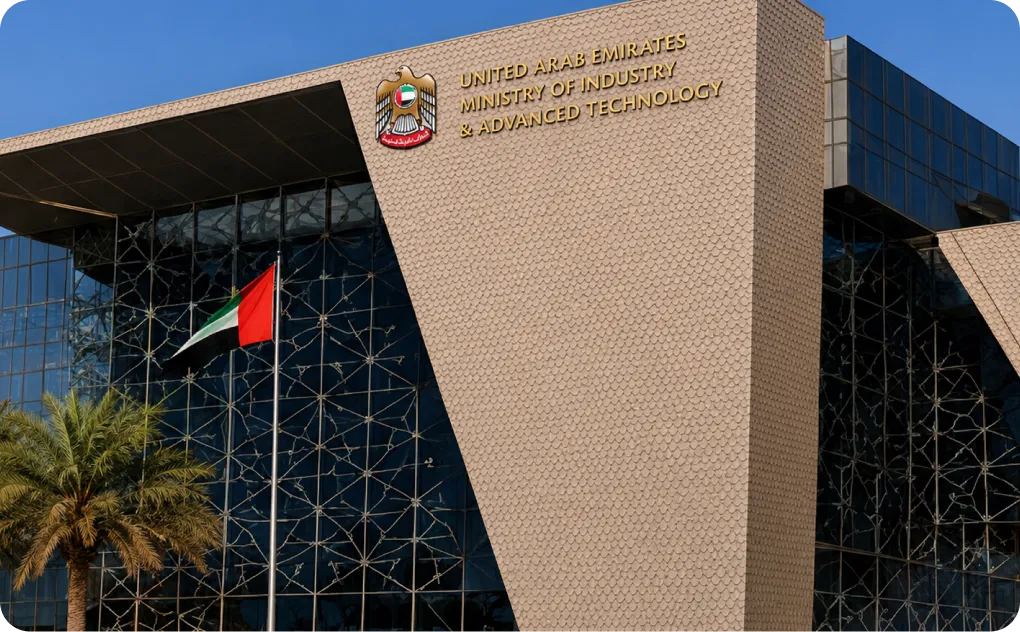
Ministry of Industry and Advanced Technology
Develops and adopts UAE technical regulations and standards, harmonizing them with GCC and international references where applicable.
Oversees ECAS, EQM, G-Mark, and related schemes, defining which products require certification and under what conditions.
Supports UAE industry, advanced manufacturing, and innovation, tying standards policy to the country’s wider industrial strategy.
Keeps metrology, accreditation, testing, and certification systems strong across the Emirates.
Confirms that products placed on the market comply with safety, quality, and performance requirements.
MOIAT is the federal body responsible for UAE technical regulations, national standards, and product conformity schemes. It runs ECAS, EQM, and the UAE side of G-Mark, and it oversees the approved certification bodies that issue conformity certificates. If a product is regulated in the UAE, MOIAT usually defines the rulebook.
No. ESMA was merged into MOIAT in 2020. MOIAT took over ESMA’s standardization and metrology functions, along with industrial policy responsibilities that previously sat elsewhere. References to ESMA still appear in older documentation and on some certification marks, but the operating authority today is MOIAT.
ECAS applies to product categories covered by specific UAE technical regulations. These may include certain electrical products, appliances, lighting products, toys, building products, and other regulated goods. Because the applicable list and technical requirements may change, each product should be checked against the current MOIAT requirements before submission.
ECAS is the mandatory conformity scheme for regulated products. Without it, those products can’t be placed on the UAE market. EQM, the Emirates Quality Mark, is voluntary and builds on compliance: it indicates consistent product quality and is often used by manufacturers to stand out in retail and B2B channels.
It depends on the product, the scheme, and whether testing is required. A straightforward ECAS certification with a complete dossier and available test reports can take a few weeks. Products needing type testing, factory inspection, or G-Mark coordination at the GCC level typically run longer, sometimes several months.
Yes, for most schemes. Foreign manufacturers generally need a local entity (a distributor, a sponsor, or an appointed compliance partner) to act as the applicant and holder of the certificate. MOIAT and its approved bodies communicate through the local representative for submissions, inspections, and renewals.
Yes. Because MOIAT is a federal authority, its conformity certificates are recognized across the UAE. Some product categories also fall under emirate-level controls (for example, Civil Defence approvals for fire-related products), so federal certification may be one step in a broader approval chain rather than the whole picture.
That varies with the scheme and the product type — most run for one to three years. When it’s time to renew, you’re basically confirming that the product, the manufacturer, and the way it’s made still meet the relevant standards and that nothing significant has changed since the original certificate was issued. We track expiry dates and take care of renewals ahead of time, so nothing lapses unnoticed.
Tell us about your product, and our team will guide you through the right route for product registration, product approval in the UAE, or related market entry approval requirements.